October 2026: Chats with the (interim) Chancellor
By now you’ve already heard the extraordinary news that my longtime colleague Francis Halzen won the Nobel Prize in physics, becoming our first sitting faculty member in more than 50 years to receive the honor.
It’s a remarkable achievement, and there’s another story here, too, about an audacious idea, decades in the making, and a university willing to invest in research whose greatest rewards might take generations to materialize.
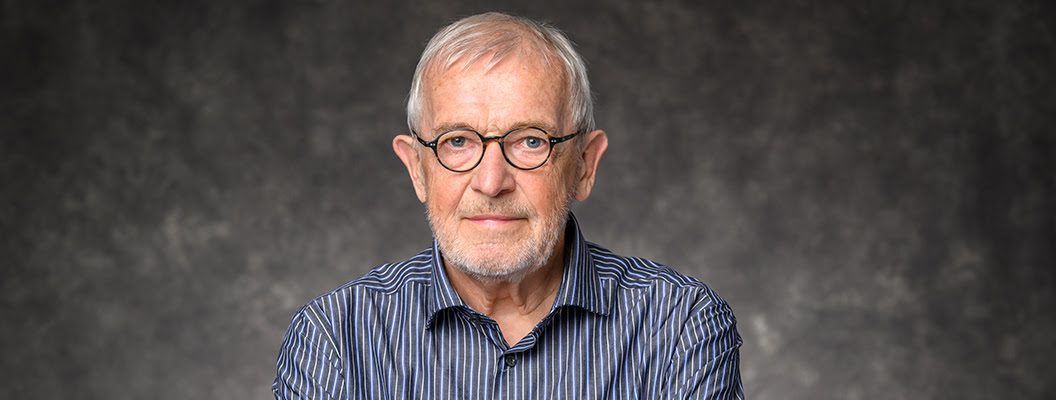
I’ve known Francis for nearly 30 years, and in that time, I’ve come to greatly admire him. There’s a humility about him that belies his talents and ambitions.
IceCube Neutrino Observatory was a scientific long shot from the start. Many doubted that thousands of sensors embedded deep within Antarctic ice would allow us to detect elusive, high-energy particles called neutrinos that travel to and through the earth from the farthest reaches of the cosmos. There were times when Francis himself wondered if the project was a viable idea, much less a good one.
But UW–Madison leaders and the Wisconsin Alumni Research Foundation believed in his vision, providing the critical early support that helped convince the federal government to invest. And the talented engineers and technicians at our Physical Sciences Lab helped bring that vision to life.
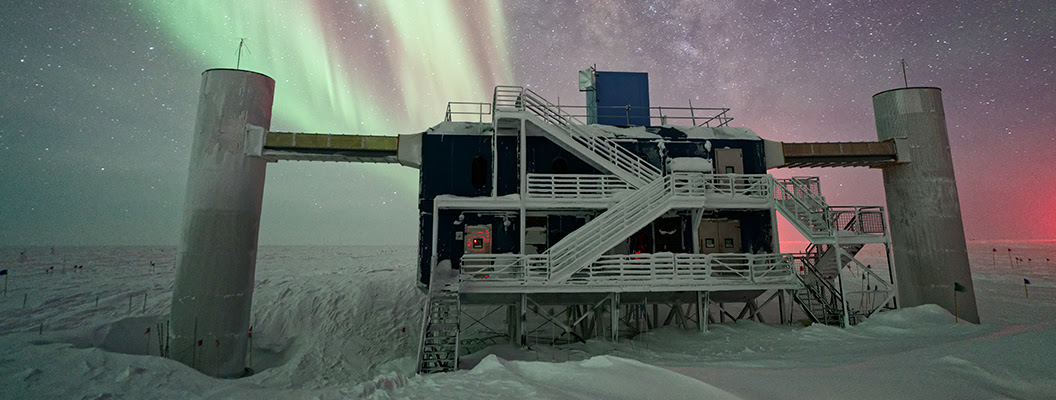
Decades later, IceCube has opened an entirely new window on the origins of the universe. It’s an extraordinary story and a reminder of the power of curiosity-driven research and UW–Madison ingenuity.
And it’s a story our students have helped to write. Ice Cube has trained 47 PhD students since 2007, and about 15 graduate and undergraduate students work on the project each year. It’s a point of pride for UW–Madison that nearly 40 percent of our undergraduates participate in high-impact learning activities like research, compared with fewer than 28 percent at our peer institutions.
Unlike research directed toward solving a particular problem, curiosity-driven research (also called “pure” or “basic” research) operates on a much longer timeline that’s unpredictable and full of setbacks as well as “aha” moments. Treating diabetes and obesity wasn’t the goal when a researcher started analyzing Gila monster venom decades ago — he was just curious about how the lizards can go months without eating. But a molecule he isolated is the basis for the GLP-1 drugs that are saving lives today.
A certain level of randomness in curiosity-driven research can draw detractors who might question its usefulness.
But if we require every line of inquiry to demonstrate where it will end up before it begins, we will only discover the things we already know to look for. And we will miss opportunities to make truly incredible innovations.
It is our ability to seek meaning in the world that makes us fundamentally human. And universities are among the few places that can pursue questions simply because they’re worth asking.
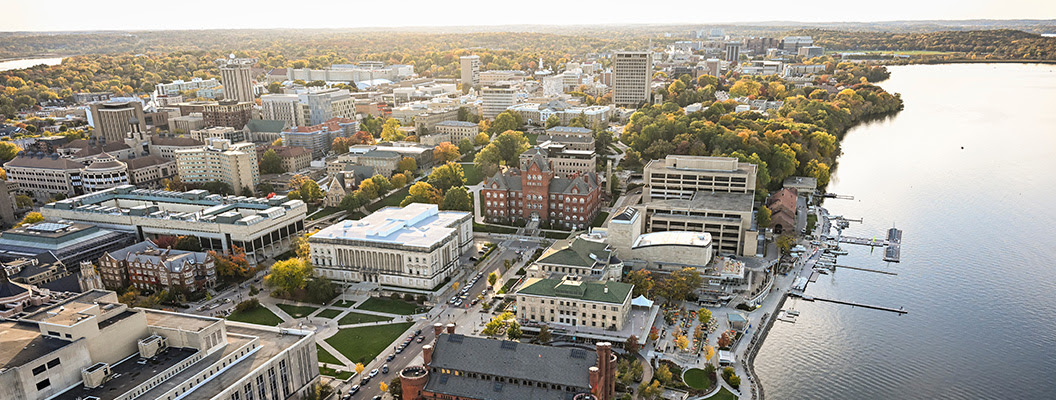
Today, researchers at UW–Madison have revealed possible treatments for an incurable childhood brain cancer while studying fruit flies. Research on gut bacteria has been tied to potentially treating or curing Alzheimer’s disease. And after decades of looking into how enzymes work, researchers engineered poplar trees that produce chemicals normally made from petroleum. These are just a few examples of all the winding paths to innovation and discovery taking place throughout our campus.
Dr. Halzen said that UW–Madison is a place where “unconventional, dangerous ideas can thrive.”
I love this phrasing. Because these types of discoveries require more than talent and top-notch facilities. They require a willingness to accept uncertainty and measure success over decades as opposed to years.
Our responsibility isn’t just to support the discoveries happening today, but to plan for those that might happen 40 years from now. And as we look to the future, I hope you’ll join me in thinking ambitiously — even, in the spirit of Francis Halzen, audaciously — about what we can make possible for UW–Madison.
Thank you and on, Wisconsin!
Eric M. Wilcots
Interim Chancellor
P.S. In science, some of the most important discoveries happen when someone challenges what is widely accepted to be true. That’s often the case in our public conversations, too. On October 28, I’m thrilled to host Robert P. George and Cornel West for a conversation on “Constructive Dialogue in a Divided Age: What Universities Can Teach About Listening, Learning, and Truth.” I hope you’ll join us!